Mat settling teaches a dog that a portable resting place predicts calm, safe downtime. It can support meals, visitors, work-from-home routines, veterinary waiting areas, and transitions after activity.
It is not a way to hold a frightened dog near a trigger or demand stillness when bathroom, movement, pain, or safety needs have not been met.
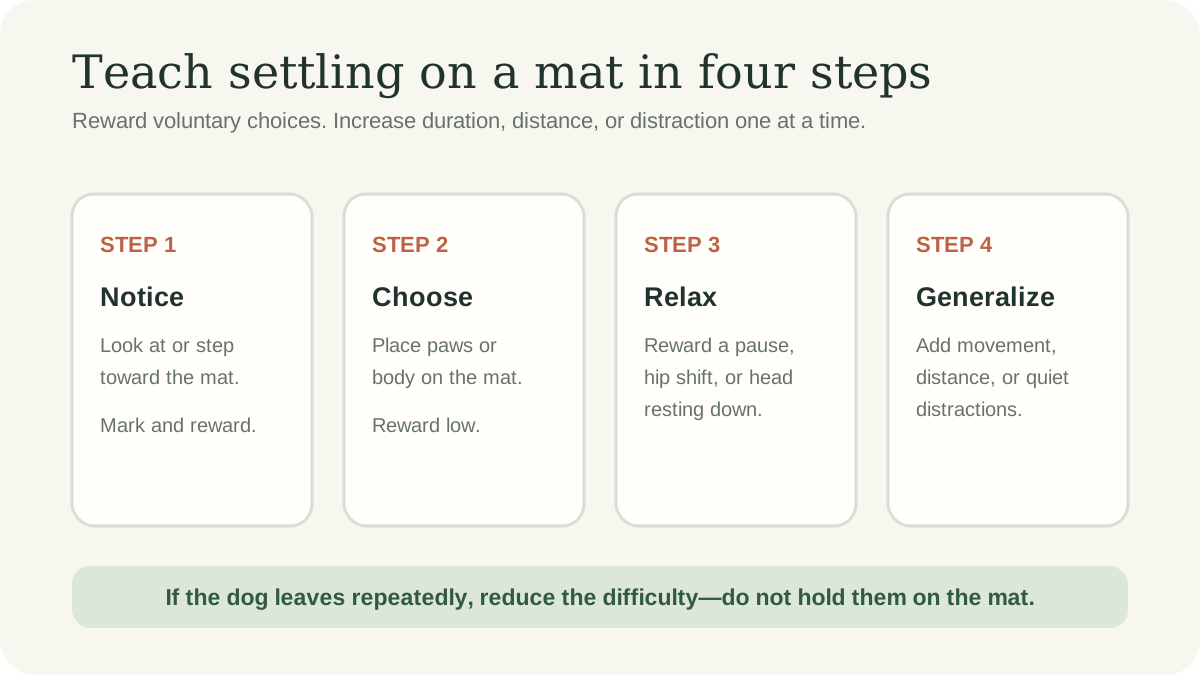
Choose an easy starting place
Use a comfortable mat or blanket on a non-slip floor in a quiet room. Pick a time when the dog is awake but not highly excited.
Place the mat down and wait. Reward any voluntary interest: looking at it, stepping toward it, sniffing, or placing a paw on it. Deliver the reward on the mat so the location becomes meaningful.
Do not pull, push, or repeatedly cue the dog onto it.
Build the position gradually
When the dog readily approaches, reward more complete contact: two paws, four paws, standing, sitting, and eventually lying down if offered comfortably.
Some dogs lie down quickly. Others need many sessions. Reward the calmest behavior the dog can offer without frustration.
Add a simple cue such as “mat” only after the dog is predictably moving toward it.
Reward signs of relaxation
A settled dog may shift weight, soften posture, rest a hip, lower the head, sigh, or disengage from surrounding activity. Quietly place rewards between the paws or on the mat.
Avoid rapid, excited delivery that repeatedly brings the dog back to attention. Gradually lengthen the interval between rewards.
Teach a release
Use a release word and encourage the dog to leave the mat. The release prevents uncertainty about how long the behavior lasts.
After a short break, reset and practice again. Several brief sessions are better than one long session that ends with the dog leaving from frustration.
Add difficulty one variable at a time
| Variable | Easy change | Harder change |
|---|---|---|
| Duration | One relaxed second | Several calm minutes |
| Distance | Person seated beside mat | Person moving around room |
| Distraction | Quiet household | Cooking, visitors, or café sounds |
| Location | Familiar room | Another room, clinic, or outdoor setting |
Return to an easier level whenever the dog repeatedly leaves, stares, vocalizes, pants, or cannot relax.
Use the mat in real life
Practice while someone reads, works, or prepares food. Later, add a familiar visitor at a distance. Bring the same mat to a low-pressure new place only after the skill is comfortable at home.
The mat should not become a signal that the dog will be ignored for hours. Continue meeting social, toilet, movement, and enrichment needs.
Common problems
The dog stares at the treats: Deliver more quietly and reward natural disengagement or head lowering.
The dog keeps leaving: Reduce duration, distraction, or distance. Make sure the mat is comfortable and the dog’s needs are met.
The dog chews the mat: Use a safer setup and supervise. Redirect to an appropriate activity rather than continuing.
The dog cannot settle around visitors: Increase distance and use a gate or separate room. Mat work is not a substitute for safe visitor management.
When to seek help
Restlessness can be related to pain, fear, gastrointestinal discomfort, medication, sleep disruption, or environmental stress. Contact a veterinarian for sudden change or signs of discomfort.
Ask a qualified reward-based trainer for help when the dog becomes increasingly distressed, guards the mat, reacts to nearby people or animals, or cannot work below threshold.
A successful settle is voluntary relaxation, not obedience under pressure. Build it slowly enough that the mat remains a place the dog chooses.
Editorial source check
Sources and scope checked by Dogward Editorial
Checked . This confirms the source record and editorial boundaries; it is not a claim of veterinary or clinical review.
Sources & further reading
Use these references to explore the topic in more depth. Links open the original publisher’s site. See how Dogward selects and checks sources.
- How to Train Your Dog to Be Calm, Relax and SettleDogs Trust
- Humane Dog Training Position StatementAmerican Veterinary Society of Animal Behavior