Dog body language is a conversation made from posture, movement, face, breathing, distance, and context. One signal—such as a wagging tail—cannot reliably explain how a dog feels.
The safest approach is to compare the whole dog with that dog’s relaxed baseline and ask what changed immediately before the behavior.
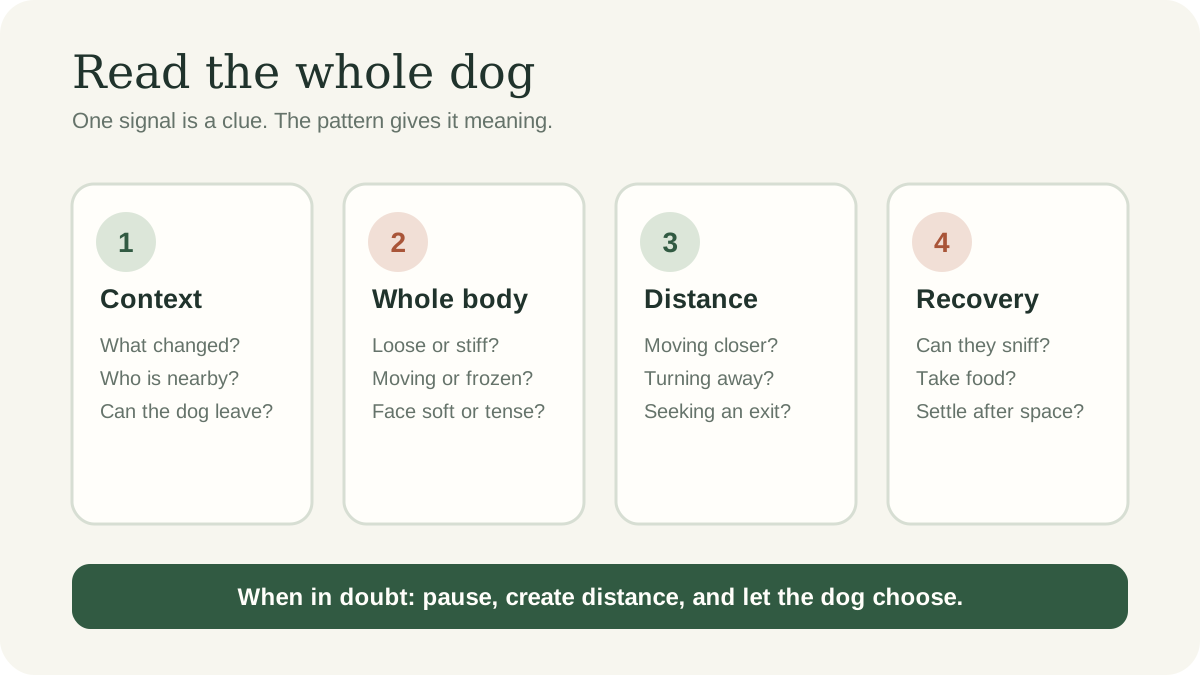
Begin with context
Notice where the dog is, who is nearby, what happened, and whether the dog can move away. The same posture may mean something different during play, veterinary handling, a greeting, or a conflict over food.
Ask:
- What changed in the environment?
- Did the dog move closer, freeze, or create distance?
- Is the body loose or becoming still?
- Can the dog take food, sniff, or respond normally?
- How quickly does the dog recover when distance increases?
Compare loose and tense patterns
| More relaxed pattern | Possible discomfort or rising tension |
|---|---|
| Curved, loose body | Stiff, frozen, or leaning away |
| Soft face and normal blinking | Hard stare, wide eyes, or rapid scanning |
| Easy movement and normal sniffing | Pacing, hiding, escape attempts |
| Comfortable distance changes | Repeated retreat or blocked movement |
| Normal breathing for conditions | Panting unrelated to heat or activity |
| Able to disengage and recover | Unable to settle after the trigger leaves |
These are observations, not diagnoses. Pain, illness, heat, fatigue, medication, and prior experience can change behavior.
Read movement and distance first
A dog moving away is communicating. Do not follow, corner, hug, lift, or demand interaction. Give the dog an exit and allow voluntary approach.
Freezing is especially important. A still dog is not necessarily calm. Pause the interaction, create space, and remove pressure.
Growling is also information. Punishing it may suppress a warning without changing the discomfort underneath.
Watch the face without staring
Lip licking, yawning, turning the head, closing the mouth suddenly, showing more of the eye, or tightening facial muscles may accompany discomfort. These signals also occur in ordinary situations, so look for clusters and change from baseline.
Avoid leaning over the dog or placing your face close while trying to inspect them.
Observe recovery
Recovery helps you judge difficulty. A dog who notices a trigger and quickly returns to sniffing may be coping better than a dog who remains vigilant long afterward.
If recovery is slow, increase distance, shorten exposure, and choose a quieter setup next time. Repeatedly pushing the dog to “get used to it” can make the situation harder.
Use a three-part observation note
Write:
- Before: location, people, animals, sound, handling, or object
- During: posture, movement, face, vocalization, distance
- After: what changed and how long recovery took
Do not recreate a dangerous event for a video. Record only when safe.
Children and visitors
Teach children to stop when the dog moves away, rests, eats, freezes, hides, or uses a chew. Adults should manage gates, greetings, food, and high-energy play.
Visitors can ignore the dog initially and allow voluntary approach. A dog does not need to greet every person.
When to get help
Contact a veterinarian for sudden behavior change, touch sensitivity, movement change, confusion, or signs that may involve pain. Seek qualified behavior help for growling, snapping, biting, guarding, panic, repeated freezing, chasing, or an inability to recover.
Reading body language does not mean predicting every action. It helps the household notice discomfort earlier, reduce pressure, and make safer choices before behavior escalates.
Editorial source check
Sources and scope checked by Dogward Editorial
Checked . This confirms the source record and editorial boundaries; it is not a claim of veterinary or clinical review.
Sources & further reading
Use these references to explore the topic in more depth. Links open the original publisher’s site. See how Dogward selects and checks sources.
- Dog Behavior and TrainingASPCA
- Humane Dog Training Position StatementAmerican Veterinary Society of Animal Behavior